Most nurse gift guides cap out around $30, because most nurse gifts should. But there are occasions that carry more weight — pinning, a hard-won specialty certification, twenty years on the same unit, retirement — and for those, a mug reads as an afterthought.
The useful question at this budget is not “what is expensive” but “what will still be used in ten years.” By that test, a surprisingly small number of things qualify.
Cardiology stethoscopes: the clearest case
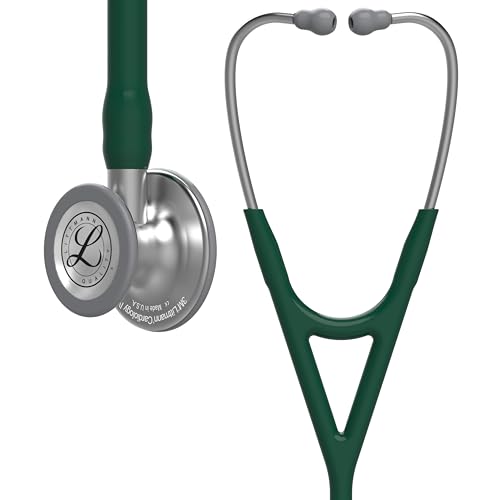
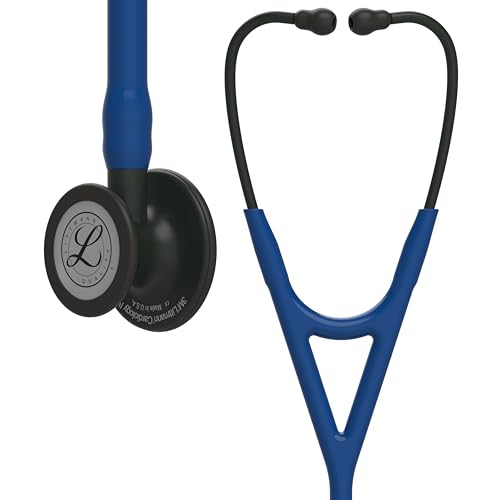
If you spend real money on one thing, spend it here. A stethoscope is held in the hands for hours of every shift, and the difference between a mid-range and a cardiology-grade scope is genuinely audible rather than cosmetic.
The Cardiology IV is the standard at this level. It is the scope ICU, cardiac, and ER nurses ask for by name, because assessing a murmur or a faint third heart sound through a noisy room is a real acoustic problem and the tunable diaphragm solves it. Expect somewhere between $200 and $275 depending on finish.
Two things make this a better gift than it looks on paper:
It lasts. A well-treated Littmann runs ten to fifteen years. Amortised, a $250 scope is cheaper per shift than the $30 one that gets replaced every three years.
Nurses do not buy it for themselves. Almost every nurse is working with the scope they were told to buy in first year. Spending $250 on yourself when the cheap one technically functions is a hard internal argument to win — which is precisely what makes it a good present.
Digital amplification: a specialist tool, not a status upgrade
At the very top end sit digital stethoscopes with active noise cancellation and 40× amplification. These are not simply “better Littmanns” and most nurses do not need one.
Where they matter enormously is hearing loss. A nurse who is being quietly pushed out of bedside assessment because they can no longer reliably hear what they need to hear is the person for whom a digital scope is not a luxury at all. If that is your recipient, this is the most meaningful gift on this page by a wide margin.
For everyone else, the Cardiology IV is the better use of the same money.
Engravable sterling silver, for the milestone rather than the shift
Jewelry does a different job. A stethoscope marks the work; a sterling silver caduceus or stethoscope pendant marks the achievement. For pinning ceremonies and graduations that distinction is the whole point — the recipient wants something that says I did this, not something that helps them do it.
Look for actual sterling rather than plated, since plated finishes wear through at the exact contact points a nurse’s necklace lives against all day. Engraving credentials and a date turns it into a keepsake rather than an accessory, and it costs very little extra.
Vein finders: the specialist splurge nobody expects
An unusual one worth knowing about. Near-infrared vein finders project a live map of the vasculature onto the skin, and for anyone whose job is repeated difficult venous access — NICU, paediatric oncology, infusion clinics, IV teams — they change the daily experience of the job.
These run from around $170 into the high hundreds. It is emphatically not a gift for a nurse who rarely cannulates. For the nurse who is handed every hard stick because they are the one who lands it, it is remarkable.
Worth being upfront: Illumivein is our own brand, so weigh our enthusiasm accordingly and compare it against the alternatives on the page.
What is not worth the splurge
Being honest about the ceiling is more useful than a longer list:
- Premium drinkware. A $45 tumbler is not meaningfully better than a $25 one and both get dented in a locker. Buy the $25 one.
- Luxury spa sets. Lovely, consumed in a month. Excellent $30 gift, poor $150 one — the money does not persist.
- Anything with the recipient’s specialty printed on it at a high price point. Nurses change units. A $150 engraved ICU item can outlive the ICU job.
Matching the gift to the occasion
- Pinning or graduation: engravable sterling silver, or a Classic III if you want practical over ceremonial.
- Specialty certification (CCRN, CEN): Cardiology IV. It reads as a professional-grade tool for a newly professional-grade skill.
- Retirement: jewelry or an engraved keepsake. A clinical tool is the wrong note for someone leaving the clinical floor.
- A nurse with hearing loss: digital amplification, without hesitation.
- NICU, paediatric, or infusion nurse: vein finder.
If you are splitting the cost across a unit, the cardiology stethoscope is the easiest group gift to organise — it has a recognisable value, a clear reason, and nobody has to guess a size or a taste.